Autonomous Delivery Robots & Drones Expand Urban Last-Mile Logistics
Sidewalk delivery rovers and low-altitude drones navigate college campuses and dense metropolitan centers for sub-20 minute meal drop-offs.

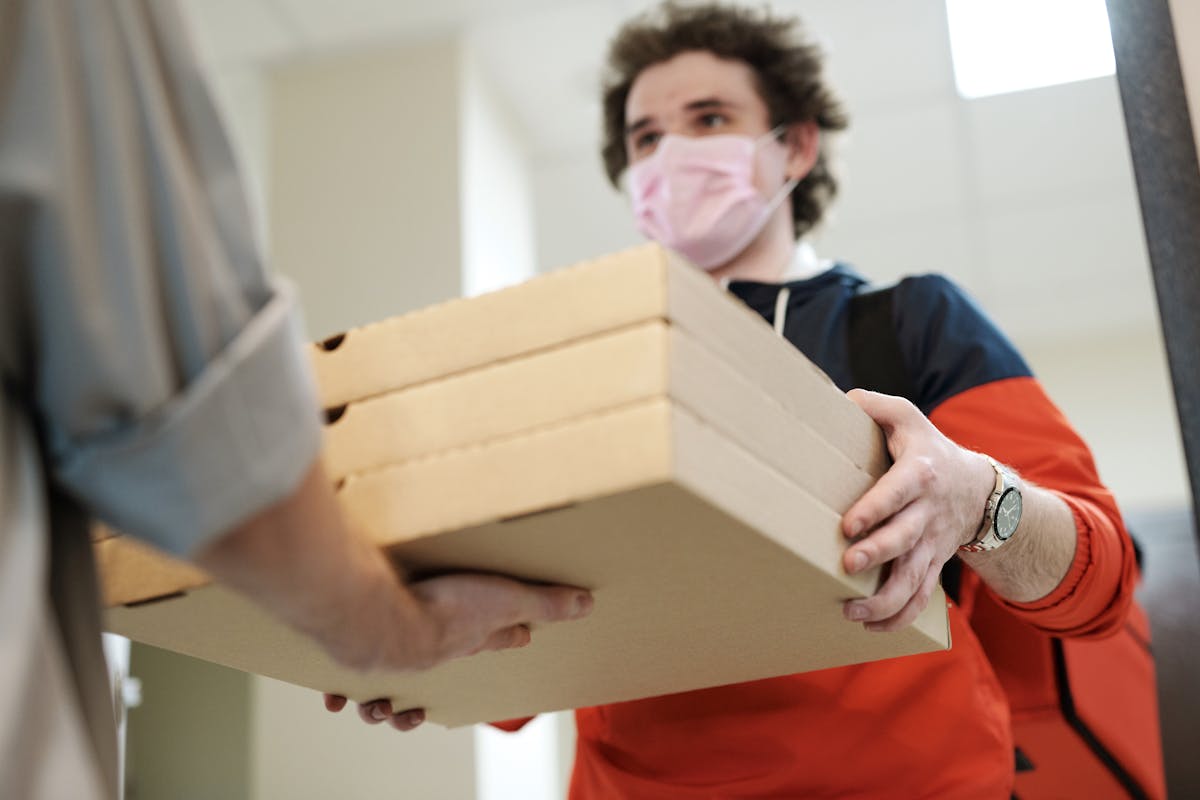
Autonomous sidewalk robots and drone delivery fleets are expanding across urban centers and university campuses, offering low-cost, emission-free last-mile food fulfillment.
Introduction: Solving the Last-Mile Food Delivery Dilemma
Last-mile food delivery has long suffered from challenging unit economics. High driver delivery fees, tip expectations, urban traffic congestion, and parking constraints inflate off-premise meal costs for consumers while eroding margins for restaurant operators. Autonomous delivery robots—operating on urban sidewalks, pedestrian plazas, and college campuses—offer a scalable, cost-effective last-mile logistics solution that completes short-distance deliveries rapidly and sustainably.
What Are Autonomous Delivery Robots?
Autonomous delivery robots are compact, electric wheeled vehicles equipped with advanced lidar sensors, camera vision systems, GPS tracking, and insulated secure cargo compartments. Designed to navigate sidewalks, crosswalks, and pedestrian pathways at speeds of 3 to 6 mph, these robots transport meal orders directly from restaurant storefronts to customer doorsteps within a 1-to-3-mile radius.
How Autonomous Delivery Logistics Work
When a customer places a delivery order via a participating mobile app, an autonomous robot is dispatched to the restaurant. Store staff load the packed meal into the robot's locked insulated compartment. The robot autonomously navigates sidewalk obstacles and traffic signals using AI obstacle-avoidance algorithms. Upon arrival at the customer's location, the user unlocks the cargo compartment via a smartphone app code to retrieve their hot meal.
Key Features of Robotic Delivery Platforms
Leading delivery robot systems incorporate advanced safety and security hardware:
- Multi-Sensor Obstacle Avoidance: Lidar, ultrasonic sensors, and HD cameras detecting pedestrians, pets, and curb drop-offs in real time.
- Temperature-Controlled Cargo Bays: Insulated compartments keeping hot entrees warm and cold beverages chilled during transit.
- Smartphone App PIN/QR Lock Systems: Ensuring secure cargo access so only the ordering customer can open the vehicle.
- Remote Monitoring & Teleoperation: Centralized human operators monitoring robot fleets remotely to assist during complex street crossings.
- Zero-Emission Electric Powertrains: Battery-powered operation eliminating urban delivery carbon emissions.
Benefits for Restaurant Operators and Consumers
Robotic last-mile delivery provides clear advantages:
- Substantially Lower Delivery Costs: Eliminating driver labor fees lowers customer delivery charges by 40% to 60%, driving higher order frequency.
- Faster Short-Distance Transit Times: Sidewalk robots bypass road traffic gridlock and parking delays in dense urban environments.
- Zero Carbon Footprint: Electric robot fleets align with municipal sustainability mandates and eco-conscious consumer preferences.
- Consistent Food Temperature Integrity: Locked, thermal-regulated compartments prevent order tampering and keep food warm.
Challenges and Regulatory Limitations
Scaling delivery robots requires navigating municipal sidewalk access regulations, pedestrian right-of-way laws, and weather constraints. Heavy snow, ice, and severe stair obstacles can disrupt robot wheel traction. Additionally, operators must secure municipal operating permits and manage public acceptance regarding sidewalk space sharing.
Implementation Considerations for Restaurant Managers
Integrating robotic delivery requires establishing a dedicated staging area near the store entrance where staff can quickly load outbound vehicles. Systems must integrate directly with store POS order dispatch screens to streamline order assignment without adding extra cashier steps.
Cost / ROI Considerations for Foodservice Operations
Robotic delivery platforms operate on per-delivery fee models or monthly fleet leasing structures that carry significantly lower costs than 30% third-party marketplace driver commissions. Lowering customer delivery fees increases direct-to-consumer order volume on store mobile apps, improving restaurant net profit margins.
Best Use Cases: University Campuses and Urban Infill
Delivery robots excel in pedestrian-heavy environments, such as university campuses, corporate office parks, and master-planned urban residential communities, where car delivery is inefficient or restricted.
Future Outlook: Drone Delivery & Hybrid Fleets
As FAA regulations evolve, autonomous sidewalk robots will combine with high-speed delivery drones to provide multi-modal aerial and ground delivery networks across suburban trade areas.
Teleoperation Centers & Fleet Management Infrastructure
While delivery robots operate autonomously 95% of the time, remote teleoperation centers provide human oversight for complex sidewalk scenarios. Centralized monitoring technicians oversee robot fleets via high-speed cellular streams, taking manual control if a robot encounters unexpected construction barricades or difficult street crossings. Remote fleet supervision guarantees safe, reliable delivery logistics across urban environments.
Optimizing Last-Mile Delivery Radiuses & Campus Routes
Deploying delivery robots within defined 1-to-3-mile radiuses maximizes battery life and delivery turnaround speed. On university campuses and corporate office parks, mapped sidewalk routes allow robots to complete deliveries within 15 to 25 minutes of kitchen departure, keeping food piping hot while offering lower delivery fees for hungry consumers.
All-Weather Sidewalk Traction & Enclosure Engineering
Operating delivery robots across diverse weather climates requires all-terrain engineering. Robots feature heated camera lenses to eliminate fogging, heavy-duty treaded tires for rain/snow traction, and IP67-rated waterproof electronics enclosures. Advanced traction controls prevent wheel slipping on wet leaves or icy sidewalks, ensuring dependable delivery logistics year-round.
Campus Infrastructure Partnerships & Sidewalk Permitting
Scaling robotic delivery fleets relies on strong municipal and university campus partnerships. Robot operators establish dedicated charging hubs, sidewalk speed limits (4 to 6 mph), and emergency remote-override controls in agreement with local planning boards, establishing safe pedestrian co-existence and community goodwill.
Customer Smartphone PIN Unlocking & Order Security
Securing delivery food during sidewalk transit is essential for consumer confidence. Delivery robots utilize smartphone PIN code unlocking systems. Upon vehicle arrival, the customer taps a button on their mobile app or enters a 4-digit code to open the locked cargo bay, ensuring food remains untouched from kitchen to doorstep.
Related FoodColumn Coverage
Explore QSR prototypes in Drive-Thru Only Restaurant Prototypes, analyze AI trends in AI Changing the Restaurant Industry, review ghost kitchen consolidation in Ghost Kitchen Market Shifts Toward Virtual Host Models, and check tech resources in The Essential Restaurant Technology Guide.
Frequently Asked Questions
How do delivery robots navigate busy urban sidewalks safely?
Robots use a combination of lidar sensors, HD cameras, ultrasonic distance sensors, and AI obstacle-avoidance software to detect pedestrians, dogs, and obstacles in real time.
How do customers open the robot to get their food?
Customers receive a secure PIN code or QR link on their mobile app upon robot arrival, which unlocks the sealed cargo compartment.
Can delivery robots operate in rain or snow?
Robots operate effectively in light rain and moderate conditions, though severe ice, heavy snowdrifts, or flooding require temporary fleet grounding.
How fast do autonomous delivery robots travel?
Sidewalk robots typically travel at safe pedestrian speeds between 3 and 6 mph.
Are delivery robots cheaper for restaurants than third-party app drivers?
Yes. Robotic delivery charges significantly lower flat fees per order compared to the 15% to 30% commission rates charged by driver-based delivery marketplaces.