Restaurant Labor Shortages and Automation ROI: What Operators Need to Know
Rising wage floors and acute hospitality labor shortages accelerate restaurant investments in kiosks, voice ordering, and kitchen automation robotics.

Running a restaurant has always depended on people. From chefs and kitchen assistants to servers, cashiers and delivery staff, every part of the operation requires coordination between employees. But restaurant operators in the United States and United Kingdom are facing a difficult combination of challenges: recruiting and retaining employees, managing wage pressures, maintaining consistent service and controlling operating expenses.
For many businesses, the traditional approach of simply hiring more employees is becoming harder to sustain. This reality is fundamentally changing how restaurant owners think about technology. Self-service kiosks, AI-powered ordering systems, kitchen display systems (KDS), automated inventory tools, and robotics are increasingly being deployed to reduce repetitive tasks and improve operational throughput. For comprehensive technical overviews of these platforms, visit our Food Tech Resource Hub.
However, automation is not automatically profitable. Every investment comes with installation costs, software subscriptions, maintenance requirements, and operational change management risks. The real question is no longer whether restaurants can automate certain tasks. It is whether the investment creates enough measurable value to justify its cost.
1. Why Restaurant Labor Is Becoming a Strategic Challenge
Labor represents one of the largest single operating expenses on a restaurant's profit and loss statement, typically consuming 28% to 34% of gross sales. Staffing shortages can affect far more than just payroll totals. When a restaurant operates under-staffed, operational friction compounds quickly across the guest journey:
- Longer customer waiting times at order counters and drive-thru lanes.
- Slower kitchen ticket preparation and delayed order expediting.
- Reduced table turnover velocity during peak dining dayparts.
- Inconsistent customer service and elevated order error rates.
- Increased psychological and physical pressure on existing kitchen staff, accelerating burnout.
- Difficulty maintaining scheduled store opening hours or late-night dayparts.
- Higher recruitment, onboarding, and training expenses due to constant turnover.
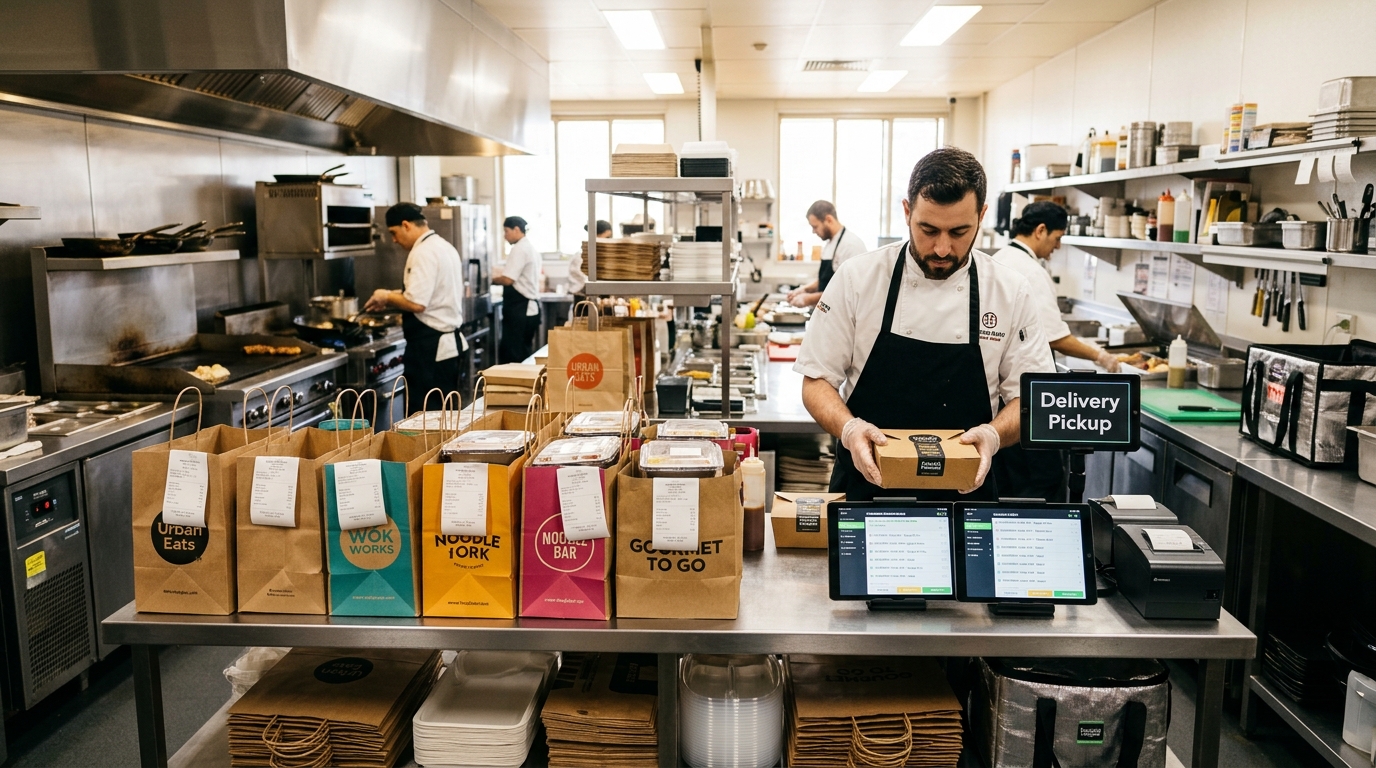
This challenge is particularly severe for quick-service restaurants (QSR), fast-casual chains, and multi-unit franchise operators. A restaurant may possess abundant guest demand, yet lack the kitchen throughput capacity needed to monetize that demand profitably.
The Operating Environment in the United States
Restaurant operators in the US must navigate rising state and municipal minimum wages, mandatory paid leave regulations, healthcare benefit thresholds, and stiff competition for hourly workers from retail and warehousing sectors. In major metropolitan markets, rising labor expenses make it critical to evaluate how employees spend every paid hour. For example, cashiers often spend 70% of their shift taking routine orders, punching payment keys, and reciting modifier prompts—activities that demand employee time without requiring high-level human creativity.
The Operating Environment in the United Kingdom
UK hospitality businesses face concurrent pressures, including National Living Wage adjustments, employer National Insurance contribution increases, elevated utility overheads, and persistent post-Brexit recruitment deficits. Concurrently, UK diners have grown accustomed to digital ordering via mobile apps, QR table ordering, and kiosks, making modern technology adoption a core expectation rather than a novelty.
2. Where Automation Delivers Measurable Operational Value
Restaurant automation does not mean replacing an entire culinary team with machines. The most practical approach identifies high-volume repetitive tasks, order entry bottlenecks, and manual reconciliations that consume employee hours without requiring human judgment.
A. Self-Service Ordering Kiosks
Self-service kiosks allow guests to browse menus visually, customize ingredients, view dietary allergens, add sides, and complete contactless payment without requiring a dedicated cashier. Our dedicated analysis on AI Ordering Kiosks & Smart Kitchen Automation demonstrates that touchscreens consistently lift average order value by 12% to 20% through automated, high-resolution upselling prompts while freeing front-of-house staff to expedite orders.
B. AI-Powered Conversational Voice Ordering
Voice AI has emerged as an essential technology for drive-thru lanes and telephone phone orders. Conversational AI models recognize spoken natural language, verify menu modifications, answer allergy inquiries, and inject order data straight into the POS. While background noise, regional dialects, and complex custom modifications still necessitate human fallback protocols, AI voice systems handle over 85% of standard orders without human intervention.
The Food World, Delivered.
Discover what's cooking around the world. Get the latest food trends, restaurant industry insights, emerging food technologies, and fascinating food statistics delivered straight to your inbox.
C. Kitchen Display Systems (KDS)
Replacing printed paper tickets with digital KDS monitors streamlines cook lines. As examined in our guide to Kitchen Display Systems (KDS) Line Speed & Accuracy, KDS screens route items to specific cook stations based on real-time prep times, ensuring grilled proteins, fried sides, and assembled bowls finish concurrently, eliminating remakes and cold food delivery.
D. AI Inventory and Demand Forecasting
Food waste and stockouts severely erode restaurant margins. Algorithmic forecasting software correlates historical POS transactions with daypart trends, weather patterns, and local events to generate precise daily prep sheets and automated purchase orders. Explore implementation strategies in our guide on AI Demand Forecasting & Automated Inventory Systems.
E. Robotics and Automated Kitchen Equipment
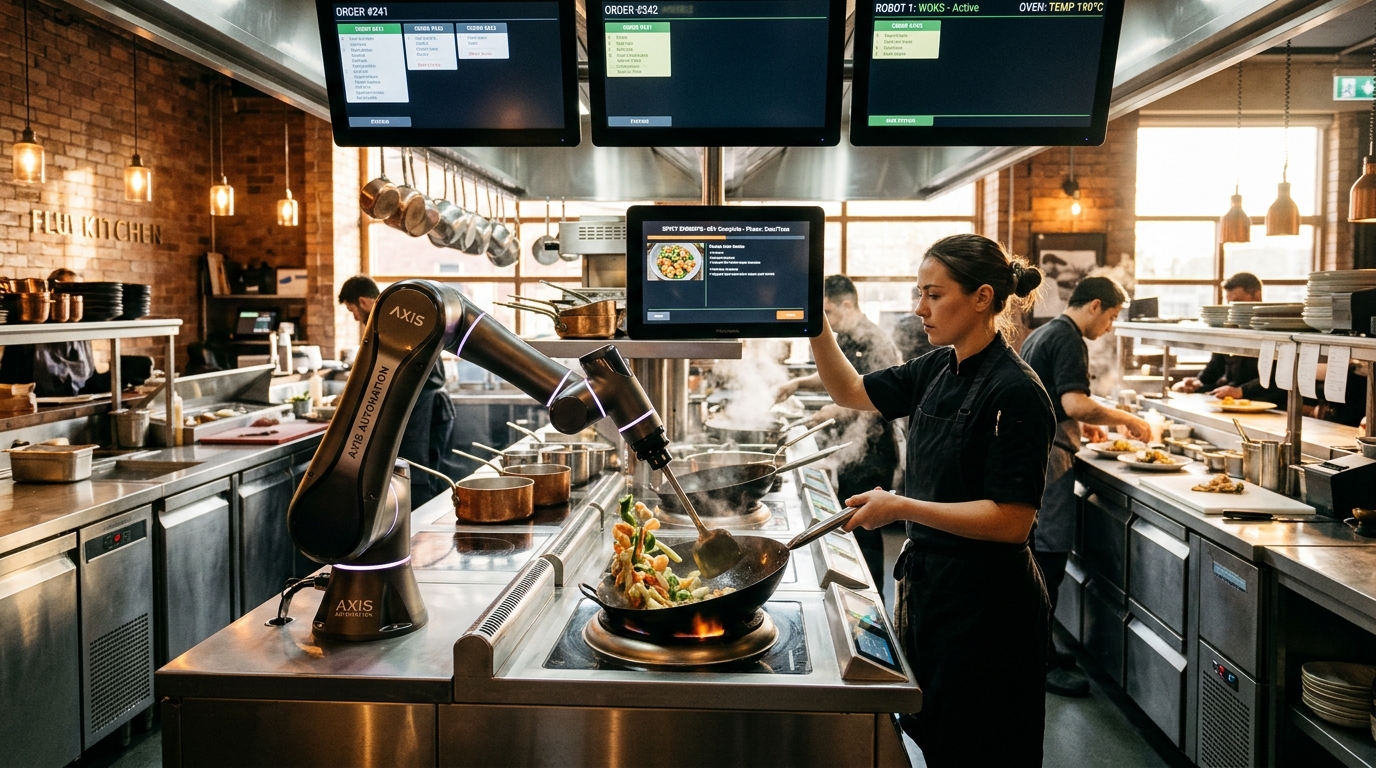
Robotics is gaining traction in commercial kitchens where tasks are repetitive, dangerous, or physically demanding. Applications include automated fry dispensing, robotic basket lifters, automated burger turners, and drink-dispensing carousels. Robotics excels in high-volume, standardized QSR kitchens with predictable workflows.
3. Calculating the Real ROI of Restaurant Automation
A common mistake operators make is evaluating automation solely by the theoretical number of staff a system might replace. A rigorous financial assessment must evaluate the total operational impact across multiple channels:
Core Value Drivers of Automation
- Labor Efficiency: Employees shift from routine data entry to food preparation and guest hospitality.
- Throughput Capacity: The store processes 15% to 30% more peak-hour orders without adding staff.
- Error Reduction: Direct guest entry on screens reduces misheard tickets, food remakes, and comped meals.
- Waste Minimization: Algorithmic prep planning reduces ingredient spoilage and inventory loss.
- Average Check Expansion: Visual upselling prompts systematically increase beverage and side attachments.
Illustrative Automation ROI Model
Disclaimer: The following table represents an illustrative scenario for a single-unit fast-casual restaurant evaluating two self-service kiosks, designed to demonstrate the mathematical methodology of ROI calculation. It is not an industry guarantee or benchmark.
| Investment & Operational Benefit Items | Illustrative Amount |
|---|---|
| Initial Hardware, Cabling & Installation (2 Kiosks) | $12,000 |
| Annual Software SaaS Subscription & Hardware Support | $2,400 |
| Annual Labor-Hour Savings (Reallocated Cashier Hours) | +$9,600 |
| Annual Gross Margin Contribution from Check Size Uplift | +$5,000 |
| Annual Avoided Cost of Misheard Ticket Remakes | +$1,200 |
| Total Annual Net Benefit (Benefits − Ongoing SaaS) | $13,400 |
| Estimated Simple Payback Period ($12,000 ÷ $13,400 × 12) | ~10.7 Months |
Actual financial outcomes vary widely based on store footfall, local wage rates, customer adoption rates, and whether freed hours translate into hard payroll cuts or improved kitchen throughput. Operators should review step-by-step procurement checklists in The Essential Restaurant Technology Guide.
4. Hidden Costs, Integration Challenges & Operational Risks
Before authorizing capital expenditure for automation, operators must budget for secondary costs and technical hurdles:
- API Integration Gaps: A kiosk or voice ordering tool that cannot communicate in real time with the primary POS or KDS creates redundant manual ticket entry.
- Network Reliability & Outage Redundancy: Cloud-dependent kiosks require enterprise Wi-Fi and automatic cellular failover routers to prevent store paralysis during broadband outages.
- Staff Usability & Change Resistance: Introducing new kitchen monitors without structured staff training leads to kitchen confusion and customer complaints.
- Customer Accessibility: Touchscreens must comply with Americans with Disabilities Act (ADA) height requirements and offer intuitive multilingual interfaces.
5. Practical Roadmap: How to Roll Out Restaurant Automation
To maximize capital efficiency, operators should execute automation through six disciplined phases:
- Identify Operational Bottlenecks: Audit store metrics to determine whether delays occur at the order counter, on the cook line, or during off-premise bagging.
- Establish Clear Baselines: Measure sales-per-labor-hour (SPLH), average order entry time, and ticket error rates before purchasing equipment. Compare baseline numbers with our Restaurant Industry Benchmarks.
- Select One Core Technology First: Avoid simultaneously introducing voice AI, kiosks, and robotic fryers. Master one platform before integrating the next.
- Run a Controlled Pilot: Deploy the hardware in a single store or across selected dayparts for 60 to 90 days to gather real-world staff and diner feedback.
- Calculate Full TCO: Factor in payment gateway processing fees, hardware warranties, spare parts, and recurring SaaS subscriptions.
- Scale Only Upon Proof: Expand the rollout across remaining locations only after the pilot achieves verified labor savings and positive guest sentiment.
Explore broader industry perspectives on artificial intelligence in our pillar analysis on How Artificial Intelligence Is Reshaping the Restaurant Industry.
The Food World, Delivered.
Discover what's cooking around the world. Get the latest food trends, restaurant industry insights, emerging food technologies, and fascinating food statistics delivered straight to your inbox.
Free newsletter. Useful insights. No spam. Unsubscribe anytime.
Frequently Asked Questions
Why are restaurants investing heavily in automation?
Restaurants deploy automation to mitigate chronic labor shortages, control rising wage expenses, speed up order throughput during peak rushes, improve ticket accuracy, and reallocate staff from cashier counters to food prep and customer hospitality.
Which restaurant automation technology should an operator consider first?
Most operators achieve the fastest return by upgrading to an open-API cloud POS and Kitchen Display System (KDS), followed by self-service ordering kiosks. These foundational technologies streamline communication without requiring costly robotic hardware.
Can restaurant automation realistically reduce payroll expenses?
Automation improves labor-hour efficiency, but whether it lowers total payroll depends on management scheduling. Often, savings manifest as increased order capacity during peak rushes, reduced overtime, and fewer food remakes rather than immediate staff layoffs.
Are self-service kiosks suitable for every dining concept?
No. Kiosks excel in high-volume, repeatable fast-food and fast-casual settings with customizable menus. Full-service, fine dining, and intimate hospitality concepts rely heavily on personal human interaction, where touchscreens could degrade the guest experience.
How should an operator calculate the ROI of an automation investment?
Operators should calculate Total Cost of Ownership (upfront hardware, installation, payment processing, recurring SaaS) and compare it against measurable financial benefits: reallocated labor hours, higher average check size via visual upselling, and reduced food waste.
Will robots completely replace restaurant employees?
No. Commercial kitchen robotics handle repetitive, hazardous, or standardized tasks (such as fry baskets and beverage dispensing). Human workers remain essential for food seasoning, culinary creativity, complex assembly, equipment maintenance, and genuine guest hospitality.